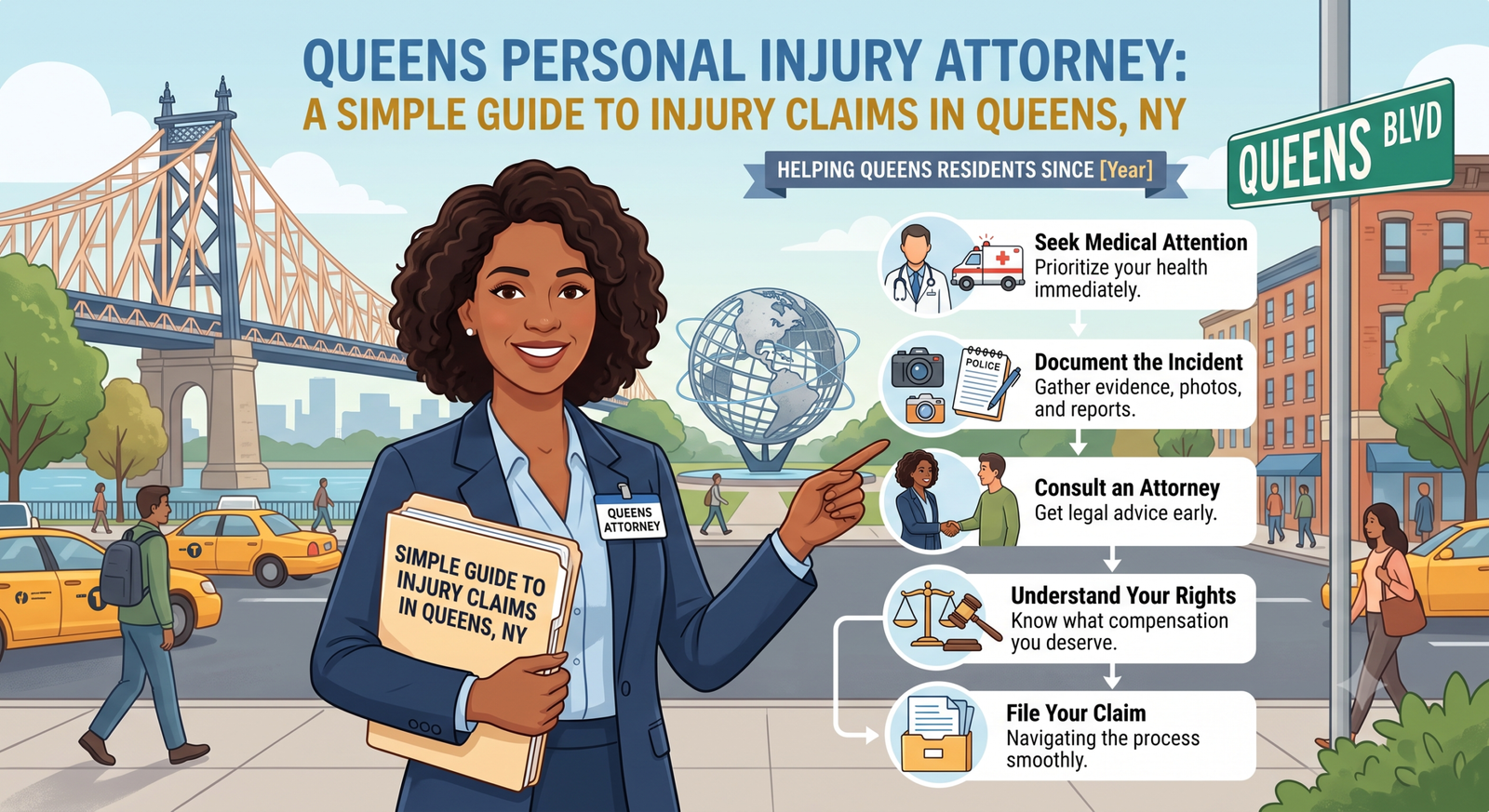
If you have been injured in a car accident, slip and fall, motorcycle crash, workplace incident, or another type of accident in Queens, you may have questions about what to do next. Should you contact the insurance company? What evidence should you collect? Do you need a Queens personal injury attorney? And how does a personal injury claim generally work?
This simple guide explains the basics of personal injury claims in Queens, New York. It covers common types of injury cases, evidence, compensation, insurance claims, choosing an attorney, and important considerations before moving forward.
Important: This article provides general educational information. Personal injury laws and deadlines can vary depending on the circumstances of a case. For advice about a specific situation, consult a qualified New York attorney.
Click to find
What Is a Personal Injury Claim?
A personal injury claim generally involves an injury that someone alleges was caused by another person’s negligence, wrongful conduct, or failure to use reasonable care.
Personal injury cases can arise from many different situations. For example, a person may be injured in a vehicle collision, while walking on a sidewalk, inside a store, or because of a dangerous property condition.
The basic process often involves:
- The accident or incident occurs.
- The injured person receives appropriate medical attention.
- Evidence relating to the incident is collected.
- Insurance coverage is identified.
- A claim may be submitted to an insurer.
- The parties may negotiate a settlement.
- If the matter cannot be resolved, litigation may become an option.
Not every injury automatically results in a successful legal claim. The facts, available evidence, applicable law, insurance coverage, and deadlines can all affect the situation.
For a broader explanation of how to evaluate and hire a personal injury lawyer, see Binghow’s guide:
The Smart Guide to Hiring a Personal Injury Lawyer in the USA
Why Search for a Queens Personal Injury Attorney?
Queens is one of New York City’s five boroughs and contains a wide range of residential neighborhoods, commercial areas, roads, transportation routes, and businesses.
Because accidents can happen in many different settings, an injury claim may involve several parties or insurance policies.
A Queens personal injury attorney may help an injured person understand issues such as:
- Whether another party may be legally responsible
- Which insurance coverage may apply
- What evidence may be useful
- How damages are calculated
- Whether a settlement offer should be evaluated
- What legal deadlines may apply
- Whether filing a lawsuit is appropriate
Hiring an attorney is not required for every injury claim. Some people handle smaller insurance matters themselves, while others seek legal assistance when the injuries, damages, liability issues, or insurance disputes are more complicated.
If you are researching attorneys throughout New York City, you can also read Binghow’s existing guide:
Top 5 Personal Injury Lawyers in New York City 2026
Common Personal Injury Cases in Queens
Personal injury claims can involve many types of accidents. Some of the most common categories include the following.
1. Car Accidents
Car crashes are a common source of personal injury claims.
A collision may result in injuries ranging from relatively minor soft-tissue injuries to serious or life-changing conditions.
Evidence may include:
- Police or accident reports
- Photographs of the vehicles
- Medical records
- Insurance information
- Witness statements
- Traffic-camera or surveillance footage when available
- Information about lost income
New York’s no-fault insurance system can also affect how medical expenses and certain economic losses are handled after a motor vehicle accident.
2. Motorcycle Accidents
Motorcycle crashes can produce serious injuries because riders have less physical protection than occupants of enclosed vehicles.
Potential evidence can include photographs of the accident scene, vehicle damage, road conditions, witness information, medical documentation, and available video footage.
Determining responsibility can require a careful review of what each driver did before the collision.
3. Truck Accidents
Commercial truck crashes can involve additional factors compared with ordinary passenger-vehicle accidents.
Depending on the circumstances, a case could involve:
- The truck driver
- A trucking company
- A vehicle owner
- A maintenance provider
- An insurer
- Other potentially responsible parties
Large commercial vehicles may also have electronic records, company records, or other evidence that can become relevant to an investigation.
4. Pedestrian Accidents
Queens has many busy streets and intersections, making pedestrian safety an important issue.
A pedestrian injured by a vehicle may need to preserve information about:
- The location of the accident
- Traffic signals
- Crosswalk conditions
- Vehicle information
- Witnesses
- Photographs
- Medical treatment
Video footage can sometimes be particularly important in pedestrian accident cases because it may help establish what happened before the collision.
5. Slip and Fall Accidents
Slip-and-fall and trip-and-fall incidents can happen in stores, apartment buildings, sidewalks, offices, parking areas, and other locations.
A property-related injury claim may involve questions about whether a dangerous condition existed and whether the responsible party knew or should reasonably have known about it.
Photographing the condition as soon as reasonably possible can be useful because dangerous conditions may be repaired or changed quickly.
6. Dog Bite Injuries
Dog-related injuries can involve medical expenses, physical injuries, emotional distress, and other losses.
The circumstances surrounding the incident matter. Information about the dog, owner, location, witnesses, prior incidents, and medical treatment may all become relevant.
What Should You Do After an Accident in Queens?
The first priority after an accident should be safety and appropriate medical care.
Once immediate safety concerns have been addressed, consider taking the following steps.
Get Medical Attention
Some injuries are not immediately obvious. Medical professionals can evaluate your condition and document injuries and treatment.
Keep copies of relevant medical records, bills, prescriptions, and other documentation.
Document the Accident
When it is safe to do so, take photographs or videos of:
- The accident scene
- Vehicles
- Property damage
- Visible injuries
- Dangerous conditions
- Road conditions
- Relevant signs or signals
Try to preserve the original files when possible.
Collect Contact Information
If witnesses saw what happened, obtain their contact information when appropriate.
Also preserve information about the other parties involved, including insurance details where available.
Be Careful With Insurance Communications
After an accident, insurance companies may contact you.
You should provide accurate information, but avoid guessing about facts you do not know. Keep records of important communications and documents.
For complicated or serious claims, getting legal advice before making significant statements or accepting a settlement can help you understand your options.
What Evidence Can Help a Personal Injury Claim?
Evidence can make a major difference when the facts of an accident are disputed.
Depending on the case, useful evidence may include:
Photographs and Videos
Photos can document vehicle damage, injuries, property conditions, road conditions, and other physical evidence.
Medical Records
Medical documentation can establish the nature of an injury and the treatment received.
Accident Reports
Police or incident reports may provide information about when and where an accident occurred and the parties involved.
Witness Information
Independent witnesses may provide information about what they observed.
Employment Records
If an injury affects your ability to work, records relating to wages, missed work, or employment may become relevant when documenting financial losses.
Insurance Documents
Keep copies of insurance policies, claim numbers, correspondence, settlement offers, and other relevant documents.
What Compensation Can a Personal Injury Claim Include?
The damages potentially available in a personal injury case depend on the facts and applicable law.
Depending on the circumstances, a claim may involve economic and non-economic losses such as:
Medical Expenses
This can include costs associated with emergency treatment, doctor visits, hospitalization, medication, rehabilitation, and other medical care.
Lost Income
An injured person may experience lost wages if an injury prevents them from working.
Future Financial Losses
A serious injury may affect a person’s future ability to work or earn income.
Pain and Suffering
Some personal injury claims may also involve compensation for physical pain and emotional effects associated with an injury.
The value of a claim cannot be determined accurately from the accident type alone. Medical evidence, liability, insurance coverage, financial losses, the severity of injuries, and other facts can all affect the outcome.
How Do Insurance Companies Evaluate Injury Claims?
Insurance companies generally examine information related to the accident, liability, injuries, medical treatment, and claimed losses.
They may review:
- Accident reports
- Medical records
- Statements
- Photographs
- Witness information
- Insurance policies
- Employment records
- Previous medical information where legally relevant
- Other available evidence
An insurance settlement offer should not automatically be assumed to represent the full value of a claim.
Before accepting a settlement, an injured person should understand what rights they may be giving up and whether the settlement addresses the losses involved.
What If You Were Partly Responsible?
Personal injury cases are not always situations where one person is completely responsible and another person has no responsibility.
New York follows comparative-fault principles. This means the injured person’s own conduct can potentially affect the amount recoverable, depending on the circumstances.
Because the effect of comparative fault depends on the specific facts and applicable law, it is important not to assume that being partly responsible automatically prevents someone from pursuing a claim.
How Do You Choose a Queens Personal Injury Attorney?
If you decide to speak with an attorney, consider several practical factors rather than choosing solely based on advertisements or online rankings.
Look at Relevant Experience
Ask whether the attorney regularly handles cases similar to yours.
For example, someone involved in a truck accident may want to ask about the attorney’s experience with commercial vehicle cases.
Verify New York Licensing
Confirm that the attorney is authorized to practice law in New York.
Ask About Communication
Find out who will handle communication and how often you can expect updates.
Understand the Fee Agreement
Many personal injury attorneys use contingency-fee arrangements, but the exact agreement can vary.
Before signing, understand:
- How the attorney’s fee is calculated
- Which expenses may be deducted
- What happens if the case is unsuccessful
- Whether litigation changes the fee arrangement
- What costs the client may be responsible for
Ask About Your Specific Case
A consultation should give you an opportunity to explain what happened and ask questions about the legal process.
You can also compare general guidance with Binghow’s broader article on how to hire a personal injury lawyer in the USA.
How Much Is a Queens Personal Injury Claim Worth?
There is no universal amount that applies to every personal injury case.
Two people involved in similar accidents can have very different claims because their injuries, medical expenses, lost income, insurance coverage, liability, and other circumstances may differ.
Factors that may influence a claim include:
- Severity of injuries
- Length and cost of medical treatment
- Lost wages
- Future financial losses
- Evidence of liability
- Insurance coverage
- Long-term effects of the injury
- Degree of fault
- Applicable legal rules
Be cautious of websites or advertisements promising a specific settlement amount without knowing the facts of your case.
Important Legal Deadlines in New York
Personal injury claims are subject to legal deadlines, and the applicable deadline can depend on the type of claim and the parties involved.
For example, claims involving government entities can have special procedural requirements, and motor-vehicle cases may involve additional rules.
Because missing a legal deadline can seriously affect a person’s ability to pursue a claim, do not rely solely on a general internet article to determine the deadline for a specific case.
If you believe you have a claim, consider obtaining advice from a qualified New York attorney as soon as reasonably possible.
Frequently Asked Questions
Do I need a Queens personal injury attorney after an accident?
Not necessarily. Some people handle straightforward insurance matters themselves. An attorney may be useful when injuries are serious, liability is disputed, insurance issues are complicated, or substantial damages are involved.
How much does a Queens personal injury attorney cost?
The cost depends on the attorney and the type of case. Many personal injury attorneys work under contingency-fee arrangements, meaning the fee is generally tied to the recovery. Always review the written fee agreement before hiring an attorney.
How long does a personal injury claim take?
There is no standard timeline. Some claims may resolve through insurance negotiations, while others can take substantially longer if litigation becomes necessary.
What evidence should I collect after an accident?
Useful evidence may include photographs, videos, medical records, accident reports, witness information, insurance documents, and records showing financial losses.
Can I still have a claim if I was partly responsible?
Potentially. New York’s comparative-fault rules can affect how responsibility and damages are handled. The exact result depends on the circumstances of the case.
Should I accept an insurance settlement?
Do not accept a settlement simply because an insurance company offers one. Before agreeing, understand what the settlement covers and whether accepting it will affect your ability to pursue additional compensation.
Where can I learn more about choosing a personal injury lawyer?
Binghow’s Smart Guide to Hiring a Personal Injury Lawyer in the USA explains factors to consider when researching and comparing personal injury lawyers.
For a New York City-focused overview, you can also read Top 5 Personal Injury Lawyers in New York City 2026.
Final Thoughts
A personal injury claim can involve much more than simply reporting an accident to an insurance company.
If you are dealing with an injury in Queens, start by focusing on your health, preserving important evidence, keeping records, understanding your insurance situation, and learning about the legal options that may apply.
If you are considering hiring a Queens personal injury attorney, compare relevant experience, New York licensing, communication practices, fee arrangements, and the attorney’s approach to cases similar to yours.
For broader legal and insurance information, continue exploring Binghow’s practical guides for insurance, legal, finance, and everyday questions.
Disclaimer: This article is for general informational purposes only and should not be considered legal advice. Laws, deadlines, and legal procedures can change and may differ based on the facts of an individual case. Consult a qualified attorney for advice regarding a specific legal matter.